
Reviewed · HOBART CITY & WALKING TOURS
Hobart History, People & Places – 2 hour city walk
Hobart history feels close on foot. Starting outside Henry Jones Art Hotel (right on Hunter Street), this 2-hour small-group walk takes you through the center with a local guide who turns buildings and street corners into clear, human stories. Guides like Lisa, Deb, and Jan each bring their own style, with lots of space for questions and photos.
I especially like the way you get both the official-looking sites and the more human sides of settlement. The walk touches colonial beginnings, the push and pull of British settlers, and it also includes Indigenous people of the area and their responses to British invasion—so it’s not just a postcard version of the past.
One thing to consider: it’s still a 2-hour walk on city pavements in all weather, so bring good shoes and expect to move at a steady pace rather than hopping in and out of vehicles.
In This Review
- What you’ll notice right away
- Starting at Hunter Street: Henry Jones Art Hotel to the CBD rhythm
- Hunter Street buildings: Victorian and Georgian details you can actually spot
- Hobart’s waterfront and markets logic: why you end at Salamanca Place
- The church, court, and prison stretch: the seat of power on foot
- City parks and statue stories: why the small detours matter
- Walking pace, group size, and why questions stay on track
- Wheelchair accessible, but still a pavement walk
- Price and value: what $27.26 buys you in real sightseeing time
- Weather and timing: dress for Hobart, not for your hometown
- Who should book this Hobart history walk
- Should you book Hobart History, People & Places?
- FAQ
- How long is the Hobart History, People & Places walk?
- Where does the tour start and end?
- Is the tour wheelchair accessible?
- How big is the group?
- What does the tour cover?
- Is food or drinks included?
- Do I need to dress for weather?
- Are service animals allowed?
- What is the cancellation policy?
What you’ll notice right away

- A tight 2-hour loop that covers waterfront, Hunter Street, parks, and ends at Salamanca Place
- Small group size (under ten) that makes questions actually easy
- Colonial + Indigenous stories tied to places you can point to
- Victorian and Georgian architecture details you’ll start spotting on your own
- Photo-friendly pauses, with maps and historical images used along the way
Starting at Hunter Street: Henry Jones Art Hotel to the CBD rhythm
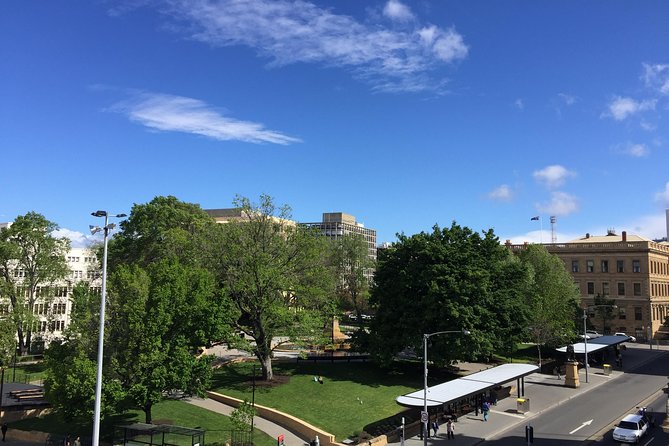
I like tours that help you get your bearings fast, and this one does that from the first minute. You meet at 25 Hunter St, just outside Henry Jones Art Hotel, which puts you right in the middle of Hobart’s walkable core. That matters because you’re not fighting buses or long transfers—you’re learning the city in the same order you’ll probably explore later on your own.
From there, your guide leads you through the CBD with an easy walking rhythm. The goal isn’t to sprint. The route is designed so you can stop, look up, and notice details. You’ll also see that the tour allows places to sit or perch along the way, which helps if your legs get tired.
If you’re arriving in town from a cruise, this is a practical choice because the meeting and end points are both central. It finishes at Salamanca Place, so you can roll right into market energy (or just grab coffee near the waterfront).
More walks through Hobart, Salamanca and Battery Point
Hunter Street buildings: Victorian and Georgian details you can actually spot
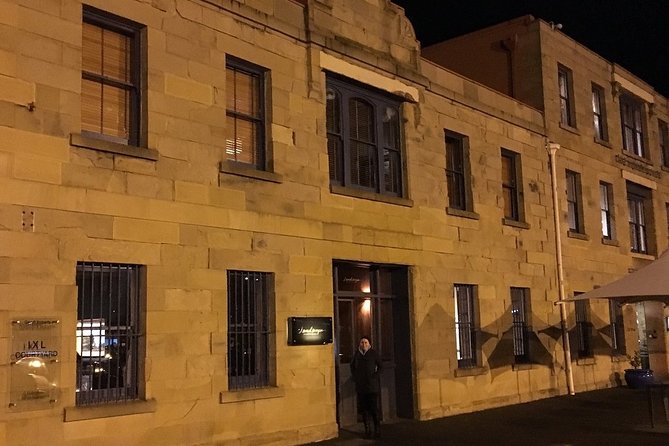
Hunter Street is where the tour starts to pay off in a very practical way: it teaches you how to read a streetscape. Instead of just saying a building is old, your guide points out specifics—what to look for and why those details mattered to the people who built and used them.
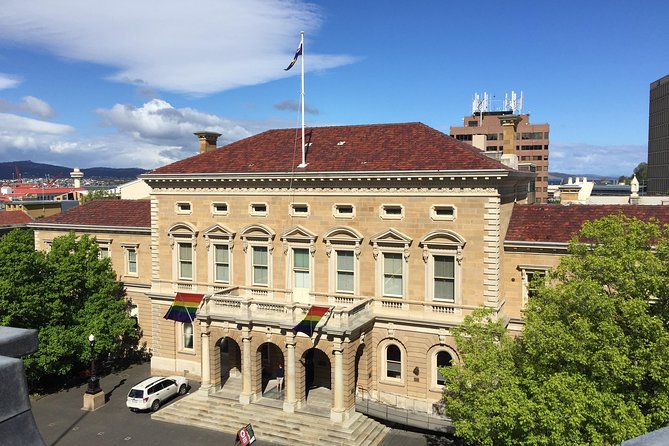
You’ll walk past heritage-listed buildings that represent Georgian and Victorian architecture, and the tour’s focus stays on the visible stuff. That means you can lift your gaze from the sidewalk and start noticing rooflines, facades, and the kind of construction that survived because it was built to last.
This is one of the tour’s strongest values for first-time visitors. If you only see a city for a day or two, learning the visual language of the place helps your own exploring later. You’ll come back to the same streets and suddenly recognize what you missed the first time.
Hobart’s waterfront and markets logic: why you end at Salamanca Place
The walk includes time down toward the Hobart waterfront and the area around Salamanca Place, and that’s not random. Your guide uses the waterfront as part of the bigger story of Hobart’s growth—where trade, movement, and daily life would have shaped the city. Then the tour finishes at Salamanca Place, which is famous for its Saturday markets and is described as the oldest markets in Australia.
Even if you’re not there on a Saturday, ending at Salamanca Place still works. The waterfront and market district are where many people naturally want to be after a walk. It gives you an immediate reward: photos, people-watching, and a low-effort plan for the rest of your afternoon.
Your guide can also point you toward favorite cafes for a coffee after the tour. That’s a small detail, but it makes a difference when you’re tired and hungry and you don’t want to guess where to go.
The church, court, and prison stretch: the seat of power on foot
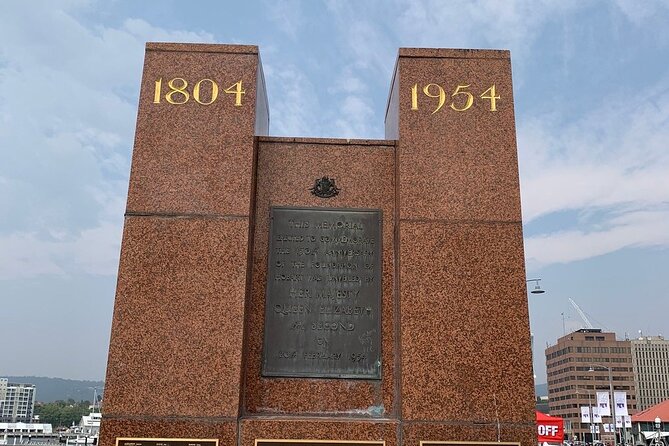
As you move into the next part of the walk, you start working toward the old power center of town. The tour includes the church, court, and prison complex area—sites that help explain how a young colony organized authority, law, and punishment in the same physical space.
This segment is especially useful if you like the big-picture story of how Hobart developed. You’re not reading a timeline in a museum. You’re seeing where institutions stood and connecting those buildings to the pressures of early settlement.
You’ll also hear about the troubles and successes of British settlers. In other words, the tour doesn’t treat colonial life as a simple march forward. It gives you the contradictions: hope and hardship in the same streets.
A heads-up: because this is a walking tour, you’ll get a solid overview, not a full museum-style transcript. If you want every detail and name, plan to use this as your first pass, then follow up later with reading or a longer guided day.
City parks and statue stories: why the small detours matter

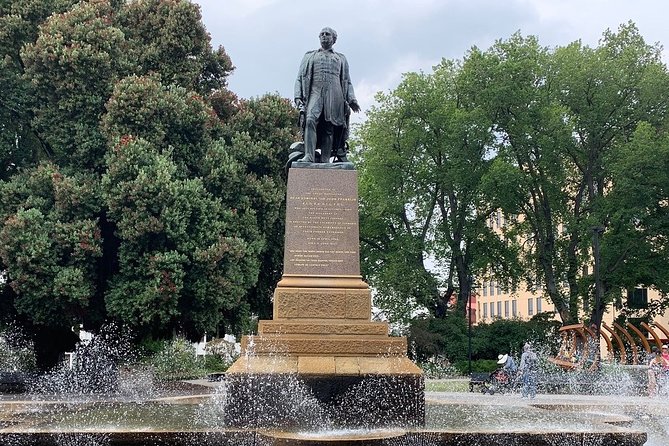
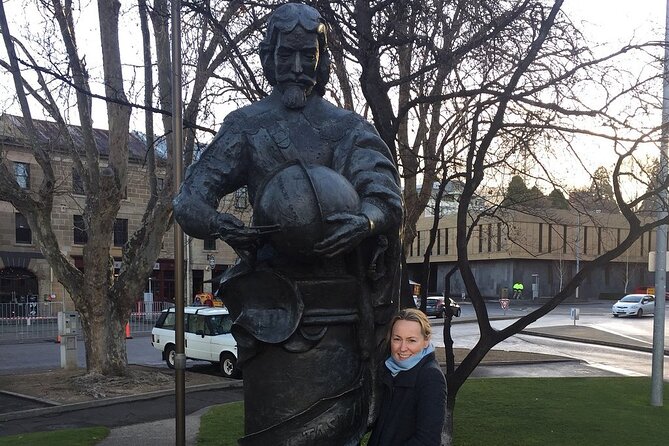
Two park stops are a big part of what makes this tour more than a straight line of buildings. You’ll stroll through a city center park where the focus turns to statues and the stories behind them. The tour helps you understand that statues aren’t just decoration; they’re decisions about memory—who gets honored, what gets remembered, and what that says about the time when the statue went up.
Then there’s another park stop with a darker tale. The description calls it a dark secret that many locals still don’t know about. You shouldn’t expect horror-movie specifics from the way it’s framed here. Instead, expect a story that reframes a place you’ve likely walked past without thinking.
These park detours are also your mental reset. They break up the concentrated architecture watching with open space, and they give your guide room to slow down and let the story land. If you like history because it comes with context and human stakes, this is the portion where that style really clicks.
More of the convict history and the old town
- Derwent River Historic Harbour Cruise From Hobart
★ 4.5 · 570 reviews - Tasman Island Cruises and Port Arthur Historic Site Day Tour from Hobart
★ 5.0 · 477 reviews - Tasman Peninsula Tour, Cruise & Port Arthur Historic Site
★ 4.9 · 339 reviews - Hobart: Historic Lunch Cruise
★ 4.6 · 271 reviews - Hobart History, People & Places – 2 hour city walk
★ 5.0 · 224 reviews
Walking pace, group size, and why questions stay on track
This is built as an intimate experience. The tour is described as small-group, with a maximum group size listed around eight in the overview, and also stated as maximum ten travelers. Either way, the practical result is the same: you won’t be stuck behind a big crowd, and you’ll have a better chance to ask questions.
The pace is also set up for photos. Several guides use maps and historical images to help you connect what you’re seeing now with what the city looked like earlier. In plain terms, it helps you stop getting lost in the facts and start building a mental picture.
You’ll probably notice that the guiding style tends to be conversational, with a bit of humor mixed in. One guide is specifically mentioned for a great sense of humor, and that matters because it keeps the tour from turning into a lecture. Even when the stories get heavy, the delivery stays approachable.
Wheelchair accessible, but still a pavement walk
The tour is listed as wheelchair accessible, and that’s a strong selling point for Hobart’s older CBD streets, which can be mixed in texture and grade. The route is a 2-hour walk along city pavements, so accessibility still depends on the exact ground conditions on the day you go.
The good news is that you’re not expected to power through without breaks. There are places to sit or perch along the route, and the overall walk is described as easy enough for most travelers to participate.
If you’re traveling with mobility needs, it’s smart to wear comfortable shoes and bring what you need for weather. The tour runs in all weather conditions, and it’s also made clear that you should dress appropriately.
Price and value: what $27.26 buys you in real sightseeing time

At $27.26 per person for about two hours, this isn’t a budget-buster, especially for a city-center walking tour with a professional local guide. The value comes from density: you cover a lot of central ground—Hunter Street, the waterfront, two park stops, and the finish at Salamanca Place—without paying for transport.
You also get a guided interpretation of themes that are hard to self-navigate: Georgian vs. Victorian details, convict-era and institutional history signals, and the Indigenous story alongside British settlement narratives. If you’ve got limited time and want your first Hobart day to feel connected rather than random, this price point makes sense.
It’s also good value because it’s small enough to feel personal. When you can ask follow-up questions, you get more than a route—you get clarity.
The main cost to you isn’t money. It’s planning: you’ll want to start with energy, because food and drinks aren’t included, and the tour doesn’t include hotel pickup or drop-off. After the tour, though, you can pivot to coffee quickly near Salamanca Place, which keeps your day flowing.
Weather and timing: dress for Hobart, not for your hometown
This tour operates in all weather conditions, so you should assume rain or wind can happen. That doesn’t mean it’s miserable; it means you should be prepared. Bring layers, a rain shell, and footwear that can handle wet pavement.
Because it’s about two hours, weather can noticeably affect comfort if you show up unprepared. Still, the tour’s route includes places to sit or perch, which can help you manage breaks.
If you’re someone who likes a calm start, aim to arrive a few minutes early at the meeting spot by Henry Jones Art Hotel. Then you can begin with a relaxed pace instead of rushing through the first stop.
Who should book this Hobart history walk
I think this tour fits best if you want:
- A first-time orientation to central Hobart, with a guided story that makes the city make sense
- History that’s tied to places you can point to, not just facts on a page
- A small-group format where you can ask questions and get direct answers
- A mix of architecture, colonial-era institutions, and park-and-statue storytelling
It may be less ideal if you prefer long, museum-style experiences or if you need a very slow walk with frequent stops. Two hours is designed to cover highlights, so it’s an overview, not a detailed deep-docket history seminar.
Should you book Hobart History, People & Places?
Yes, you should book it if you’re planning a short Hobart stay or you want your first day to land the main themes of the city. For the price, it gives you a lot of central ground, a guide who can explain what you’re seeing, and an ending at Salamanca Place that makes the rest of your afternoon easy.
Skip it only if your schedule is too tight for a steady 2-hour pavement walk, or if you strongly dislike walking in mixed weather. Otherwise, this is the kind of tour that helps you see more—and enjoy the rest of the city more—because you understand what you’re looking at.
FAQ
How long is the Hobart History, People & Places walk?
The tour lasts about 2 hours.
Where does the tour start and end?
It starts outside 25 Hunter St, Hobart TAS 7000, and ends at Salamanca Place (Salamanca Pl, Hobart TAS 7000).
Is the tour wheelchair accessible?
Yes, the tour is wheelchair accessible.
How big is the group?
The tour is described as a small-group experience with a maximum group size of 10 travelers (and the overview notes a maximum of eight).
What does the tour cover?
You’ll visit the Hobart waterfront, Hunter Street, Salamanca Place, and go through city parks, including an area associated with church, court, and prison. You’ll also hear about colonial roots and Indigenous responses to British invasion.
Is food or drinks included?
No. Food and drinks are not included.
Do I need to dress for weather?
Yes. It operates in all weather conditions, so dress appropriately for the day.
Are service animals allowed?
Yes, service animals are allowed.
What is the cancellation policy?
You can cancel for a full refund up to 24 hours before the experience starts. If the tour is canceled due to poor weather, you’ll be offered a different date or a full refund. If a minimum number of travelers isn’t met, you’ll also be offered a different date/experience or a full refund.
More of the Hobart Story
- Derwent River Historic Harbour Cruise From Hobart
★ 4.5 · 570 reviews - Tasman Island Cruises and Port Arthur Historic Site Day Tour from Hobart
★ 5.0 · 477 reviews - Tasman Peninsula Tour, Cruise & Port Arthur Historic Site
★ 4.9 · 339 reviews - Hobart: Historic Lunch Cruise
★ 4.6 · 271 reviews - Cascades Female Factory Historic Site [official]
★ 4.5 · 110 reviews
More Tour Reviews in Hobart
- Bruny Island Food, Sightseeing, Guided Lighthouse Tour & Lunch
★ 5.0 · 2,989 reviews - Full-Day Guided Bruny Island Tour from Hobart
★ 5.0 · 1,331 reviews - kunanyi/Mt Wellington Explorer Bus- Return Tour (2.5 hours)
★ 5.0 · 1,249 reviews - Hobart: kunanyi/Mt Wellington Explorer Bus Pass
★ 4.8 · 848 reviews - Bruny Island Traveller – Gourmet Tasting and Sightseeing Day Trip from Hobart
★ 5.0 · 786 reviews
Walking Tours of Hobart
- Hobart: 3-Hour City Sightseeing Tour
★ 4.6 · 179 reviews - Hobart City Sightseeing Tour including MONA Ticket
★ 4.4 · 153 reviews - Shore Excursion: Hobart Highlights Day Tour
★ 4.5 · 107 reviews - Old Hobart Pub Walking Tour
★ 4.5 · 91 reviews - Shore Excursion-Hobart Wanderer
★ 5.0 · 87 reviews
Just Added: Fresh Hobart and Tasmania Reviews





Hobart City & Walking Tours, compared.
 ★ 4.63-Hour City Sightseeing TourFrom $46179 reviews
 ★ 4.4Hobart City Sightseeing Tour including MONA TicketFrom $99153 reviews
 ★ 4.5Shore Excursion: Hobart Highlights Day TourFrom $107107 reviews
 ★ 4.5Old Hobart Pub Walking TourFrom $2791 reviews
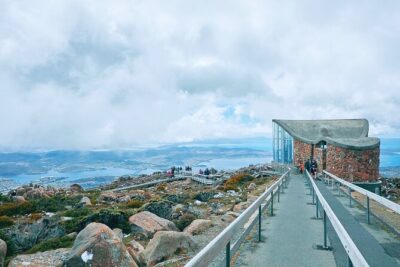 ★ 5.0Shore Excursion-Hobart WandererFrom $11487 reviews
 ★ 5.0Hobart Highlights Day TourFrom $10084 reviews
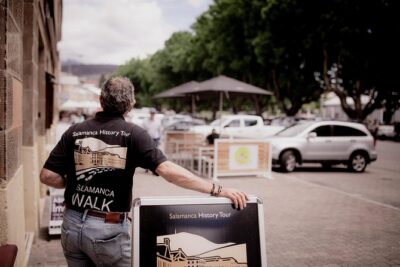 ★ 5.0Salamanca Walk – History TourFrom $2881 reviews
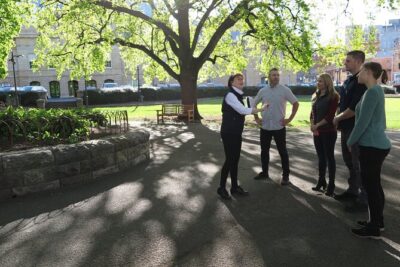 ★ 5.0Hobart Historic Walking TourFrom $2764 reviews
Browse the lists this tour appears in