
Reviewed · HOBART CITY & WALKING TOURS
Salamanca Walk – History Tour
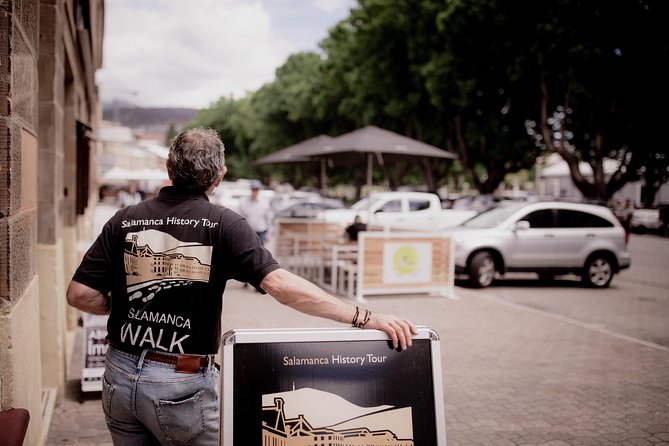
Hobart’s convict story is hiding in plain sight. This Salamanca Walk History Tour strings together Salamanca, Battery Point, and key parks with a guide who uses old photos and drawings so the past feels real, not dusty. You also get an easy-going route that works for kids and grandparents alike, plus a guide who happily answers questions.
I really love two things. First, the way Peter Lutz (and other guides from this group, like Carmen and Lydija) brings scenes to life with pictures and drawings you can study as you walk. Second, the small-group size, capped at 15 travelers, keeps the tour relaxed and interactive.
One heads-up: it’s about 2.5 hours of walking, mostly on your feet, so if you need lots of stops to sit and linger, plan your breaks before or after the tour.
In This Review
- Key Highlights You’ll Care About
- Why This Salamanca and Battery Point Walk Feels Different
- Who Leads It, and How the Story Stays Human
- Arthur Circus Park: Getting the Lay of the Land Fast
- St. David’s Park: Where Stories Meet Quiet Views
- Salamanca Place and the Market Area: From Work to Trade
- Battery Point: Architecture With Convict-Era Context
- The Convict Heritage Angle: The Hard Work Behind the Pretty Streets
- Included With the Tour (and Why That’s Worth Something)
- Pace, Comfort, and Who This Is Best For
- Value: Is $28.69 a Good Use of Your Time?
- Practical Tips Before You Go
- Should You Book the Salamanca Walk History Tour?
- FAQ
- How long is the Salamanca Walk History Tour?
- Where does the tour start?
- Where does the tour end?
- How big is the group?
- Is the walk physically demanding?
- What’s included in the ticket price?
- Is food or alcohol included?
- Are children allowed, and do they get a discount?
- Is a mobile ticket used?
- What is the cancellation policy?
Key Highlights You’ll Care About

- Small group (max 15) means you’re not just following a moving crowd
- Old photos and drawings help you see the difference between then and now
- Battery Point convict-era stories connect architecture to real lives and hard work
- Gently paced route fits a wide range of ages and abilities
- Salamanca market precinct context helps you understand what you’re actually looking at
- Derwent River viewpoints give the area a sense of place, not just facts
Why This Salamanca and Battery Point Walk Feels Different

Salamanca and Battery Point can look like postcard Hobart: tidy streets, charming old buildings, and that classic Tasmanian cool. The trick is learning what you’re looking at. This tour does that fast, and without making it feel like you’re trapped in a lecture.
You get the story behind the town’s early growth—how people carved out a colony, how the landscape changed, and how daily life worked when the settlement was still fighting for survival. Instead of memorizing dates, you walk from spot to spot and build a sense of how Hobart became what you see today.
And because the guide uses pictures, drawings, and photo comparisons, you don’t just hear about the past. You can actually match it to the streets in front of you. That’s a big part of why people rate this so highly.
More walks through Hobart, Salamanca and Battery Point
Who Leads It, and How the Story Stays Human
The tour is run by Peter Lutz, and the reviews are consistent: the guide is personable, with good humor, and he’s happy to stop and answer questions. That matters more than you might think. In places with old buildings, you’ll inevitably wonder why something looks the way it does, or what a specific detail used to mean. A guide who can explain on the spot keeps the tour from turning into one-way storytelling.
The tour also leans interactive. You’ll hear plenty of anecdotes mixed with history, and you’ll get time to ask things that pop up as you walk. One of my favorite signs of a good walking tour is this: the guide points out details you’d otherwise miss completely—like architectural hints or clues about how the shoreline and land use changed over time.
If you’re a first-timer in Hobart, take that energy and use it. Bring a couple of questions like:
- What was life like for the people who built these streets?
- Why did the town grow the way it did?
- What can I see today that traces back to that era?
Arthur Circus Park: Getting the Lay of the Land Fast
Your walk begins at Salamanca Arts Centre at 77 Salamanca Place in Battery Point. From there, the tour starts moving toward Arthur Circus Park, which works as a smart early stop. It’s not just a green space. It’s a place where the guide can help you orient yourself—how roads, views, and building styles relate to the settlement that came before.
Arthur Circus Park also shows up in the details people rave about. One review highlights the presence of a pine from America—small, odd bits like that make the place feel specific, not generic. You’ll likely find your guide pointing out features you wouldn’t notice on your own, including how the area’s layout shaped everyday movement and work.
This is also a good moment to slow down and let the tour set the tone: calm pace, story-first explanations, and the sense that the guide has lots of material ready to connect the dots.
St. David’s Park: Where Stories Meet Quiet Views

Next up is St. David’s Park. Parks like this can seem like a breather on a walk, but on a history route, they often do more than offer shade. They give the guide a chance to connect the built environment to what the colony faced—space, weather, resources, and the real constraints of establishing a town on tough terrain.
Even when you’re not focused on the park itself, St. David’s Park helps you understand pacing and scale. You’re learning where you are in the wider Hobart story, not just collecting facts. That makes the later building and street details click.
Also, since the tour is described as not physically demanding and suitable for all ages, these park moments matter. They give you time to absorb and ask questions without feeling rushed.
Salamanca Place and the Market Area: From Work to Trade
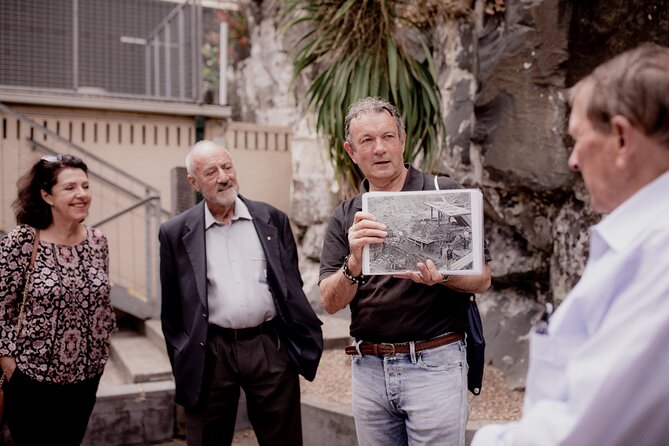
A huge part of the value here is that you don’t only see the famous streets. You learn what the area was for. Salamanca and the surrounding market precinct have long been tied to commerce and community life, and the tour connects that modern-day vibe to earlier settlement patterns.
In the Salamanca area, people mention stops around Salamanca Place and the market zone, with explanations of how the neighborhood changed as Hobart grew. One review calls out reclaimed land and environmental changes—exactly the kind of detail that transforms a stroll into understanding.
There’s also mention of the first fleet memorial being relevant for some visitors with ancestors tied to it. If that’s your situation, this tour may feel especially meaningful. Even if it isn’t, the guide’s approach helps you see why memorials and monuments exist in the first place: they’re reminders that the colony’s story wasn’t abstract.
More of the convict history and the old town
- Derwent River Historic Harbour Cruise From Hobart
★ 4.5 · 570 reviews - Tasman Island Cruises and Port Arthur Historic Site Day Tour from Hobart
★ 5.0 · 477 reviews - Tasman Peninsula Tour, Cruise & Port Arthur Historic Site
★ 4.9 · 339 reviews - Hobart: Historic Lunch Cruise
★ 4.6 · 271 reviews - Hobart History, People & Places – 2 hour city walk
★ 5.0 · 224 reviews
Battery Point: Architecture With Convict-Era Context
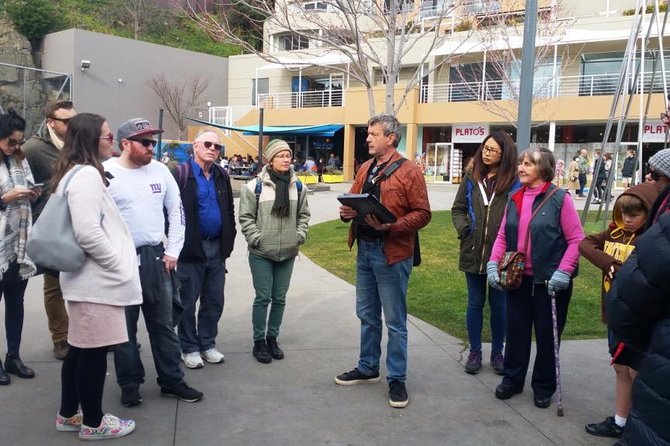
Battery Point is the heart of the tour’s atmosphere. The guides focus on the architectural treasures overlooking the Derwent River, but the point isn’t to admire buildings like museum pieces. It’s to understand who lived and worked there, and what brought them to the area.
Battery Point is tightly connected to the convict heritage of Hobart. The tour highlights the convict-built foundations of Hobart by convict labour, and it connects that labor to real activities like quarrying stone and hunting whales. Even if you’ve heard the general convict story before, the walk-style context tends to make it feel more grounded—work, tools, movement, and survival, not just a headline.
You’ll also get help noticing why certain homes and streets look the way they do. Reviews specifically praise the guide for pointing out finer details still visible today. That’s what you want on a short, 2.5-hour outing: you should leave with better eyes.
The Convict Heritage Angle: The Hard Work Behind the Pretty Streets
This tour leans into the darker side of Hobart’s past—without making it grim for the sake of being grim. You’ll hear about craftsman, clergyman, free settlers, merchants, and convicts, and how those groups fit into the colony as it formed.
What makes this angle useful is that it connects categories of people to concrete tasks. The tour frames the colony’s early work as a mix of quarrying and building, with a background that includes maritime activity like whaling. That matters because it explains why a town grows where it grows. You’re not just seeing old walls. You’re learning why those walls were needed.
If you like history that feels practical—how people ate, worked, built, and adapted—this fits. And because you’ll see modern streets while hearing what once happened there, it’s a powerful way to understand the gap between then and now.
Included With the Tour (and Why That’s Worth Something)
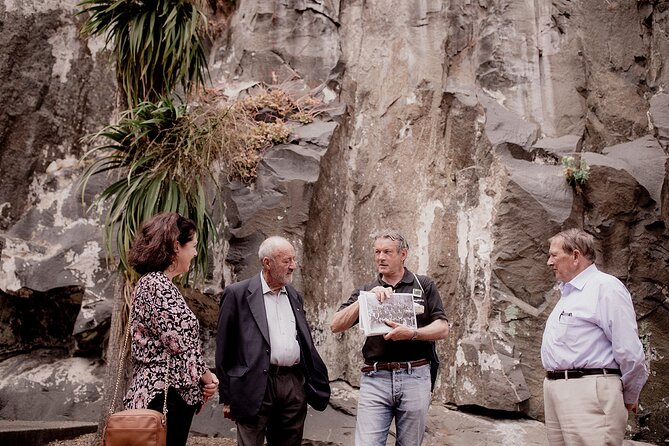
The only clear “included” items are pictures and drawings of Hobart, Salamanca, and Battery Point. That might sound small, but it’s a deal-maker.
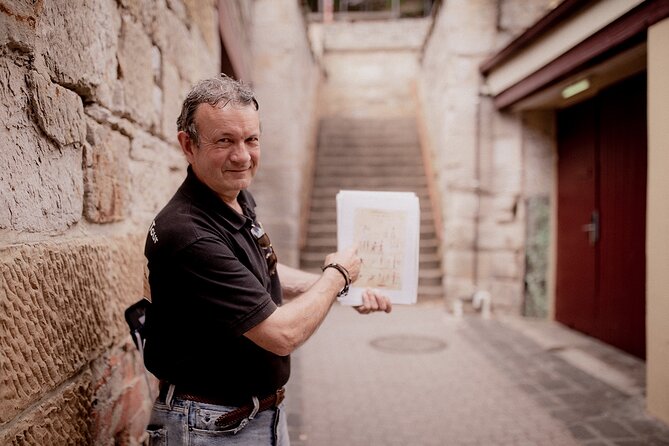
A walking tour without visuals often relies on your imagination. Here, the visuals help you compare past and present, so you can follow the story even if you don’t know Hobart’s layout. Reviews also mention laminated photos and maps that help the guide explain what you’re seeing in front of you.
If you’re the type who likes proof—old images, comparisons, and clear references—this style is a real advantage.
Pace, Comfort, and Who This Is Best For
This is described as physically not demanding and suitable for all ages. That lines up with how small-group walks usually work: gentle pace, frequent pauses for explanation, and time to look at what’s around you.
It’s still a walk, though. At around 2 hours 30 minutes, you’ll be on your feet for most of the experience, with breaks tied to stops and viewpoints. One review even suggests that if you want more question time and a bit more ability to look around, you might feel a time pinch.
So here’s how I’d plan it:
- Wear comfortable shoes. Battery Point streets and park paths can be uneven.
- If you’re traveling with kids under 16, this tour is designed to be family-friendly, and kids get free tickets.
- If you’re older or you tire easily, consider going at a steady, calm pace from the start and ask your guide to help you slow down at photo points.
Value: Is $28.69 a Good Use of Your Time?
At $28.69 per person, you’re paying for a guided, story-driven walk with a maximum of 15 people, plus the guide’s photo-based material. That’s the key value point: you aren’t just paying for someone to lead you from point A to B.
You’re paying for interpretation—turning buildings, streets, and parks into a clear narrative about Hobart’s convict heritage and early development. People also highlight that the guide’s explanations can add up to a much stronger appreciation of the area, and that the tour helps you notice details you’d miss on your own.
If you’re in Hobart for a short time, this is also the kind of tour that helps you plan the rest of your day. One review even hints that it’s a good way to get hungry for lunch—because after learning what you’re seeing, your appetite and curiosity tend to kick in.
Practical Tips Before You Go
A few things will make this tour smoother:
- Bring questions. The guide is clearly set up to answer them, and that’s when the tour becomes more than a fixed script.
- Use the guide’s photos to spot details. Look at a picture, then look for the matching feature in the street scene.
- Plan for a return to the start point. The tour ends back at the meeting location, so you can head to nearby lunch or attractions right after.
- The tour uses a mobile ticket and offers confirmation at booking, so you’ll want your device handy.
Also, this is near public transportation, and service animals are allowed. That’s helpful if your mobility plan involves public transit or you rely on an assistance animal.
Should You Book the Salamanca Walk History Tour?
Book it if you want a short, high-impact way to understand Hobart’s early story—especially the convict-era foundations—and you like history that points at real buildings and real street details. This is also a smart first-weekend tour if Salamanca and Battery Point are on your list, since it helps you get your bearings and spot what matters when you wander later on your own.
Skip it only if you strongly prefer longer sit-down museum-style time, or if you dislike walking for about 2.5 hours, even at an easy pace. In that case, you might want a different format with fewer stops and more rest.
If you’re open to photos, stories, and a calm group pace, this tour is one of the best uses of a few hours in Hobart.
FAQ
How long is the Salamanca Walk History Tour?
It’s about 2 hours 30 minutes.
Where does the tour start?
The meeting point is Salamanca Arts Centre, 77 Salamanca Place, Battery Point TAS 7004.
Where does the tour end?
The tour ends back at the meeting point.
How big is the group?
It’s a guaranteed small-group tour with a maximum of 15 travelers.
Is the walk physically demanding?
The tour is described as physically not demanding and suitable for all ages.
What’s included in the ticket price?
You get pictures and drawings of Hobart, Salamanca, and Battery Point.
Is food or alcohol included?
No. Alcoholic beverages and food and beverage items are not included.
Are children allowed, and do they get a discount?
Yes. It’s described as fun for the whole family, with free tickets for children under 16.
Is a mobile ticket used?
Yes, it’s listed as having a mobile ticket.
What is the cancellation policy?
You can cancel for a full refund up to 24 hours in advance. Free cancellation is allowed up to that cutoff, based on local time. If the tour is canceled because a minimum number of travelers isn’t met, you’ll be offered a different date or a full refund.
More Tours in Hobart
- Bruny Island Food, Sightseeing, Guided Lighthouse Tour & Lunch
★ 5.0 · 2,989 reviews - Full-Day Guided Bruny Island Tour from Hobart
★ 5.0 · 1,331 reviews - kunanyi/Mt Wellington Explorer Bus- Return Tour (2.5 hours)
★ 5.0 · 1,249 reviews - From Hobart: Full-Day Bruny Island Tour with Guide
★ 4.7 · 755 reviews - Day Tour in Mt. Field, Mt. Wellington, Bonorong Wildlife Sanctuary and Richmond
★ 5.0 · 735 reviews
More Tour Reviews in Hobart
- Bruny Island Food, Sightseeing, Guided Lighthouse Tour & Lunch
★ 5.0 · 2,989 reviews - Full-Day Guided Bruny Island Tour from Hobart
★ 5.0 · 1,331 reviews - kunanyi/Mt Wellington Explorer Bus- Return Tour (2.5 hours)
★ 5.0 · 1,249 reviews - Hobart: kunanyi/Mt Wellington Explorer Bus Pass
★ 4.8 · 848 reviews - Bruny Island Traveller – Gourmet Tasting and Sightseeing Day Trip from Hobart
★ 5.0 · 786 reviews
Walking Tours of Hobart
- Hobart History, People & Places – 2 hour city walk
★ 5.0 · 224 reviews - Hobart: 3-Hour City Sightseeing Tour
★ 4.6 · 179 reviews - Hobart City Sightseeing Tour including MONA Ticket
★ 4.4 · 153 reviews - Shore Excursion: Hobart Highlights Day Tour
★ 4.5 · 107 reviews - Old Hobart Pub Walking Tour
★ 4.5 · 91 reviews
Just Added: Fresh Hobart and Tasmania Reviews





Hobart City & Walking Tours, compared.
 ★ 5.0Hobart History, People & Places – 2 hour city walkFrom $27224 reviews
 ★ 4.63-Hour City Sightseeing TourFrom $46179 reviews
 ★ 4.4Hobart City Sightseeing Tour including MONA TicketFrom $99153 reviews
 ★ 4.5Shore Excursion: Hobart Highlights Day TourFrom $107107 reviews
 ★ 4.5Old Hobart Pub Walking TourFrom $2791 reviews
 ★ 5.0Shore Excursion-Hobart WandererFrom $11487 reviews
 ★ 5.0Hobart Highlights Day TourFrom $10084 reviews
 ★ 5.0Hobart Historic Walking TourFrom $2764 reviews
Browse the lists this tour appears in