
Reviewed · HOBART HOP-ON HOP-OFF & SIGHTSEEING BUS TOURS
Hobart Hop-on Hop-off Bus Tour
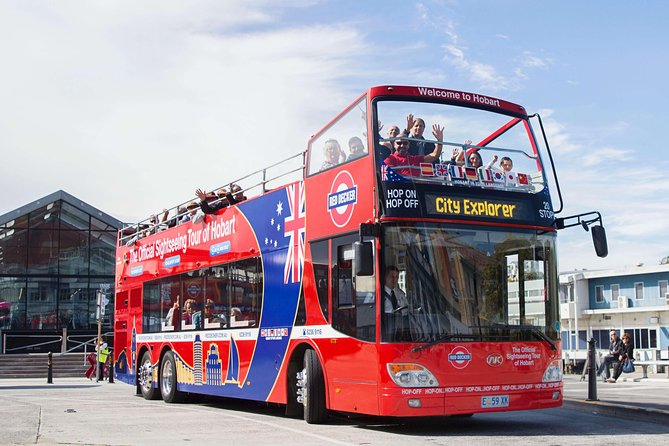
A red double-decker bus makes Hobart easy. This hop-on hop-off loop uses a mobile ticket and gives you onboard commentary while you bounce between neighborhoods. I like that it’s built for independent sightseeing, with a route that hits major sights like the Botanical Gardens and the wharf area without you needing to drive.
Two things I’d call out right away: you get air-conditioned comfort and WiFi on board, so the ride stays pleasant between hops. The second big win is flexibility. You can do the full loop, or hop off for short walks and museum time, then re-board later with a 24- or 48-hour pass.
One consideration to plan around is timing. The service is not an all-day, all-evening operation, with the last bus scheduled to run at 3pm (and the loop completing later), so you’ll want to start early if your itinerary includes sunset plans.
In This Review
- Key points before you get on
- How the Hop-On Hop-Off loop really works in Hobart
- Price and what you’re actually paying for ($32.28 value check)
- Where the loop begins: Tasmanian Travel & Information Centre (and why it’s smart)
- Wharfs and the Salamanca/Battery Point vibe: Brooke Street Pier to Princes Wharf
- Suburb connections by bus: CSIRO, Hampden Rd, De Witt St, and St Georges Terrace
- Wrest Point to Sandy Bay Road: when you want city edges without driving
- Cascade Brewery Bar: the stop that can turn a ride into a plan
- Maritime Museum Tasmania and the city learning stops
- Botanical Gardens, Rose Gardens, and the “good for a slow walk” part of Hobart
- The final city nodes: Zero Davey Boutique Apartments and Collins St area wrap-up
- Audio, WiFi, and top-deck comfort tips you’ll appreciate
- Smart ways to use a 24- or 48-hour pass (so you don’t waste time)
- Operating hours: the “don’t get caught out” section
- Should you book the Hobart Hop-On Hop-Off bus tour?
- FAQ
- How long is the Hobart hop-on hop-off bus loop?
- Do I get to choose between 24 and 48 hours?
- Is the ticket a mobile ticket?
- What’s included with the ticket besides bus rides?
- Where does the loop start and finish?
- Which key areas are included on the route?
- What are the operating hours for the last bus?
- How can I access commentary in other languages?
- Are service animals allowed?
Key points before you get on

- 24- and 48-hour passes let you choose between a quick orientation loop and a slower, second-day explore
- 90-minute loop starting/ending at the Tasmanian Travel & Information Centre, so it’s easy to structure your day
- Stops that make sense for walking, including Salamanca Place, Battery Point, the Botanical Gardens, and the Maritime Museum area
- Free Red Decker guide + onboard WiFi + air-conditioning, which adds real value on a cold or rainy day
- Clear recorded commentary (and options for other languages via earphones you can request)
- Limited operating hours, so don’t leave key hop-offs for late afternoon
How the Hop-On Hop-Off loop really works in Hobart
This tour is designed to be low-stress. You buy a 24- or 48-hour hop-on hop-off ticket, then ride the same city loop in a double-decker red bus whenever you want within that time window. The loop is listed at about 90 minutes, and you can either stay onboard for the whole circuit or jump off when something catches your eye.
You’ll start at the Tasmanian Travel & Information Centre, which also serves as the return point for the loop. That matters because it gives you a dependable “home base” for re-boarding, especially if you’re hopping between waterfront spots, gardens, and museum-type stops. And because your ticket is mobile, you’re not juggling paper tickets at each re-board moment.
A helpful detail from the onboard experience: the recorded commentary is clear, and the driver can add extra local info. That turns the ride from just transportation into a guided orientation. If you’re only in Hobart briefly, that can save you hours of figuring out what’s where.
More ways around Hobart on the sightseeing bus

Price and what you’re actually paying for ($32.28 value check)
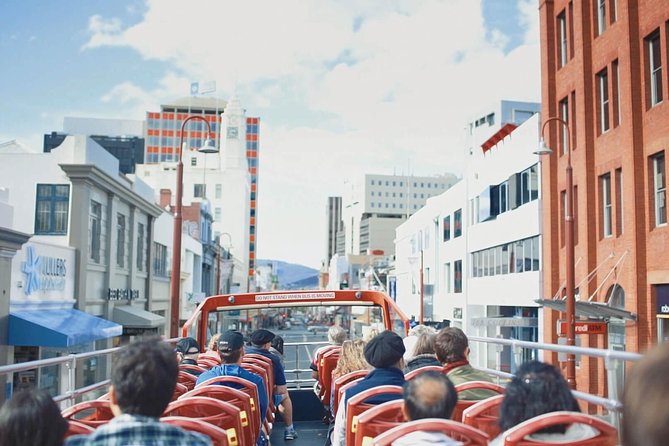
At $32.28 per person, this is not a bargain-priced “random bus ride” product. You’re paying for three things that can add up fast when you’re on a tight schedule:
- Unlimited re-boarding within your chosen pass duration (24 or 48 hours)
- Onboard support extras: WiFi, air-conditioning, and a free copy of Red Decker’s The Official Sightseeing Guide to Hobart
- Time-saving routing: a single loop that connects multiple top areas without you coordinating parking, rideshares, or bus transfers
There’s also a practical angle: when you’re tired—jet-lagged, cruising, or simply done with navigating—this kind of transport can be worth it. One cruise-day style use case makes sense here: hop on at the cruise arrival area, see the city in one go, then decide what’s worth a closer look later.
If you’re the kind of traveler who compares every cost, you’ll want to watch your timing. One rider noted there were better day-of deals than the posted price, so if you’re flexible, it can pay to check what’s available when you arrive. Still, for most first-timers, the convenience plus included guide and onboard comfort usually justifies the spend.
Where the loop begins: Tasmanian Travel & Information Centre (and why it’s smart)
The loop starts and finishes at the Tasmanian Travel & Information Centre. This is a good choice because it’s a natural first-stop anchor: you can orient yourself right away, then decide how far you want to walk or how many re-boarding cycles you’ll need later.
If you like to structure a day, do this first:
- Ride the loop once without getting off
- Note the stops that match your interests
- Use your second hop-offs to build a plan
That approach works especially well if you’re trying to fit in a brewery stop, a garden visit, and a museum without turning your day into a transportation puzzle.
Wharfs and the Salamanca/Battery Point vibe: Brooke Street Pier to Princes Wharf

The early part of the loop gives you that classic Hobart “start near the water” feeling. You’ll pass through stops like Brooke Street Pier and outside Princes Wharf No. 1 (listed at 30 Morrison St).
This is the section I’d aim for if you want:
- A straightforward start to the day
- Easy walking areas near the water
- A chance to see how the waterfront connects with the rest of town
Two hop-off areas highlighted for this route are Salamanca Place and Battery Point. Even if you don’t get off immediately, you’ll get the value of seeing where they sit in the city flow. Then, if you decide you want to linger, you can return and re-board later with less guesswork.
One small technique I’d use: if you’re planning to go to multiple “near the water” spots, do those first while you still have energy for walking.
Suburb connections by bus: CSIRO, Hampden Rd, De Witt St, and St Georges Terrace
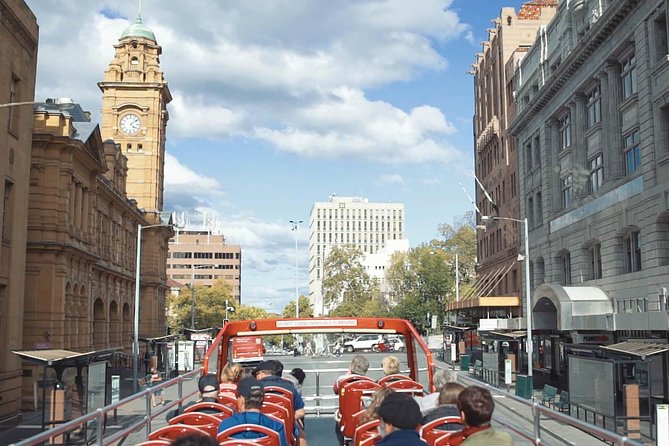
After the waterfront, the loop moves into a different rhythm. Stops like outside CSIRO (3 Castray Esplanade), the corner of Hampden Rd and Colville St, and near the De Witt St/Cromwell St intersection are less about one single landmark and more about getting you to real neighborhoods.
This is where a hop-on hop-off route earns its keep. You don’t have to pre-plan every tiny stop—you can simply treat these as access points. If you decide you want to spend time in a suburb area, or if your day includes something not central to town, those intermediate stops can be the difference between a short, pleasant walk and a long trek.
Also, the route includes Unit 19/64 St Georges Terrace near Sandy Bay Rd, which is a reminder that this isn’t only a central-city loop. It spreads out enough that you can see more than just the downtown postcard view.
- Bruny Island Food, Sightseeing, Guided Lighthouse Tour & Lunch
★ 5.0 · 2,989 reviews - Full-Day Guided Bruny Island Tour from Hobart
★ 5.0 · 1,331 reviews - kunanyi/Mt Wellington Explorer Bus- Return Tour (2.5 hours)
★ 5.0 · 1,249 reviews - Hobart: kunanyi/Mt Wellington Explorer Bus Pass
★ 4.8 · 848 reviews - Bruny Island Traveller – Gourmet Tasting and Sightseeing Day Trip from Hobart
★ 5.0 · 786 reviews
Wrest Point to Sandy Bay Road: when you want city edges without driving

Later stops bring you toward Wrest Point and 143 Sandy Bay Rd (at the corner with Queen St). This section is useful if you want to see how Hobart stretches out, and it can work well for travelers who don’t want to drive but still want the “where am I in relation to everything” picture.
Here’s the practical way to use these points:
- If you plan a stop for food, a sunset walk, or a short wander, pick one or two stops in this area, not five.
- Re-board strategically. Don’t overschedule while you’re still learning the route.
In other words, treat this as the “expand your view” part of the day.
Cascade Brewery Bar: the stop that can turn a ride into a plan

One stop is named directly for a reason: Cascade Brewery Bar. If you’re hoping to build an actual half-day plan out of a bus tour, this is often the easiest payoff stop because you can line up your sightseeing with a food-and-drink-style break (even though your ticket doesn’t include meals).
The route also continues through nearby points like 123 Cascade Rd (corner of Cascade Rd and McRobies Rd) and then heads back toward the city core via 409 Macquarie St (corner with Weld St). That makes Cascade-area time work like this: you can hop off at Cascade, spend a couple of hours, then re-board without feeling like you’ve abandoned your itinerary.
If you hate bus backtracking, aim to bundle your “hop-offs” into 1–2 areas per loop cycle, then let the bus connect the rest.
Maritime Museum Tasmania and the city learning stops

Hobart has a natural “learn a little, see a little” travel style, and the loop reflects that. You’ll reach Maritime Museum Tasmania and then move through other central stops such as Village Cinemas Hobart and 119 Collins St near the Murray St intersection.
Even if you’re not a museum person, these stops are helpful because they keep you near recognizable city addresses. You can spend time indoors, then step back onto the bus when you’re ready.
The loop also includes 101 Campbell St near the corner with Brisbane St. This is another stop that’s more about access and convenience than a single sightseeing moment. Think of it like: if you have a specific appointment, shop, café, or walk you want, these are the points that help you get there without a car.
Botanical Gardens, Rose Gardens, and the “good for a slow walk” part of Hobart
The route’s most clearly labeled nature/park moment is Royal Tasmanian Botanical Gardens. It’s a top priority stop for me because it’s the kind of place where an hour can turn into two without you noticing. Your bus ride becomes a transition between city viewpoints and slower walking time.
You also get University Rose Gardens at the corner of Brooker Hwy and Liverpool Street (opposite the ABC building). If you want something gentler than a full garden event, a rose garden stop can work as a shorter break that still feels like you left the city streets behind.
One cold-weather note that matters for your comfort: the top deck can get chilly. If it’s a windy day, you might prefer seating on the lower deck when you can, especially if you’re planning to hop off and walk around the gardens. The bus is air-conditioned, but the exterior wind is still real when you’re up high and moving.
The final city nodes: Zero Davey Boutique Apartments and Collins St area wrap-up
Near the end of the route, you’ll pass Zero Davey Boutique Apartments (corner of Davey St and Hunter St). This is a useful late-stage stop because it keeps you connected back toward the city center and helps with re-boarding if you’re hopping off earlier and then wanting to “return home” to continue.
At this point, you can decide whether to:
- Finish the full loop and reset for another day with your 48-hour pass, or
- Re-board only as needed and keep your sightseeing compact
It’s a good time to double-check what you loved most and repeat it—especially if you have the 48-hour option.
Audio, WiFi, and top-deck comfort tips you’ll appreciate
The onboard experience is built around recorded commentary that’s described as clear and easy to hear. That’s a big deal if you’re trying to understand what you’re seeing without staring at a map all the time. Some drivers also add extra personality and humour, which makes the ride feel less like a script reading and more like a conversation with someone who knows the city.
There’s also WiFi on board and air-conditioning, both of which are genuinely useful. WiFi can help you check next stop directions and opening times for the places you want to visit. A/C helps during hot days, and it’s also a practical buffer when you’re alternating between outdoor walks and indoor stops.
Language access is another practical detail. If you want the commentary in different languages, you can ask the bus driver about earphones for translation options. Plan for the fact that this may not be automatic for every rider; it’s smart to ask early so you’re set up before you’re half a loop in.
And then there’s the top-deck comfort reality: if the day is chilly, you may end up with freezing wind on your face. Layer up, and if you hate cold, choose a seat lower when possible.
Smart ways to use a 24- or 48-hour pass (so you don’t waste time)
This is the part that makes or breaks the value. A hop-on hop-off bus only feels like a deal when you use your time well.
Here are the strategies that work best with how this route is set up:
- First loop for orientation: Ride once without hopping off. You’ll spot what you actually want to visit rather than guessing.
- Then pick 2–4 hop-off stops: Don’t try to do everything on the same loop cycle. Choose your priorities (for many people: Salamanca/Battery Point, Botanical Gardens, Maritime Museum area, plus one food/drink-style stop like Cascade Brewery Bar).
- Use re-boarding to reduce walking: If you find you’re tired, just stay onboard to move instead of forcing long cross-city walks.
- Do the second day differently: With a 48-hour pass, revisit the stops that clicked. It turns your first day into planning, and your second day into a more relaxed explore.
If you’re arriving on a cruise, this route can be a clean way to handle a day with limited daylight. Hop on, see the city, then decide what deserves a closer visit.
Operating hours: the “don’t get caught out” section
This bus service doesn’t run late. The last bus is scheduled for 3pm, and the loop completion is at 4.30pm. That means you’ll want to plan hop-offs earlier in the day, especially if you plan to spend real time at gardens or indoor venues.
If you’re the type who likes long lunches or late mornings, set an alarm and give yourself margin. The best move is to board your first loop early, then schedule your bigger stop (like the Botanical Gardens or Maritime Museum area) before late afternoon.
A practical bonus: if the weather turns, the air-conditioned ride plus onboard WiFi can keep you comfortable while you wait for your next hop-off decision. And if weather cancels the experience on the operator’s side, you’ll be offered a different date or a full refund.
Should you book the Hobart Hop-On Hop-Off bus tour?
I’d book this if you want an easy first step into Hobart with minimal planning. The included guide, WiFi, and air-conditioned bus ride add real value, and the route hits major areas like Salamanca Place, Battery Point, and the Botanical Gardens. It’s also a strong choice when you don’t want to deal with driving in a new city.
Skip it (or at least don’t rely on it alone) if your trip is only a few hours and you’re hoping to do a late-afternoon plan. The 3pm last bus rule can pinch your timing, so build your schedule around earlier sightseeing.
If you can manage a morning start, you’ll likely find this is one of the simplest ways to get oriented fast, then spend your time on the stops you actually care about.
FAQ
How long is the Hobart hop-on hop-off bus loop?
The city loop is listed at approximately 1 hour 30 minutes.
Do I get to choose between 24 and 48 hours?
Yes. You can choose either a 24-hour or a 48-hour hop-on hop-off pass.
Is the ticket a mobile ticket?
Yes. The tour uses a mobile ticket.
What’s included with the ticket besides bus rides?
Your ticket includes the hop-on hop-off city loop pass, a free copy of Red Decker’s The Official Sightening Guide to Hobart, onboard WiFi, and an air-conditioned vehicle.
Where does the loop start and finish?
The loop starts and finishes at the Tasmanian Travel & Information Centre.
Which key areas are included on the route?
The route includes stops in areas such as Salamanca Place, Battery Point, and the Botanical Gardens.
What are the operating hours for the last bus?
The tours start from 9am, and the last tour is at 3pm, with a 4.30pm loop completion.
How can I access commentary in other languages?
The tour provides multilingual options, and you can ask the bus driver for earphones to use the translated commentary.
Are service animals allowed?
Yes. Service animals are allowed on this experience.
More Tours in Hobart
- Bruny Island Food, Sightseeing, Guided Lighthouse Tour & Lunch
★ 5.0 · 2,989 reviews - Full-Day Guided Bruny Island Tour from Hobart
★ 5.0 · 1,331 reviews - kunanyi/Mt Wellington Explorer Bus- Return Tour (2.5 hours)
★ 5.0 · 1,249 reviews - From Hobart: Full-Day Bruny Island Tour with Guide
★ 4.7 · 755 reviews - Day Tour in Mt. Field, Mt. Wellington, Bonorong Wildlife Sanctuary and Richmond
★ 5.0 · 735 reviews
More Tour Reviews in Hobart
- Bruny Island Food, Sightseeing, Guided Lighthouse Tour & Lunch
★ 5.0 · 2,989 reviews - Full-Day Guided Bruny Island Tour from Hobart
★ 5.0 · 1,331 reviews - kunanyi/Mt Wellington Explorer Bus- Return Tour (2.5 hours)
★ 5.0 · 1,249 reviews - Hobart: kunanyi/Mt Wellington Explorer Bus Pass
★ 4.8 · 848 reviews - Bruny Island Traveller – Gourmet Tasting and Sightseeing Day Trip from Hobart
★ 5.0 · 786 reviews
Around Hobart by Sightseeing Bus
- Hobart: 24-Hour Hop-on Hop-off Sightseeing Bus Ticket
★ 4.5 · 770 reviews - Hobart: Kunanyi/Mt Wellington Hop-on Hop-off Bus Pass
★ 4.8 · 343 reviews - Hobart: Mount Wellington and Hobart Sightseeing Combo Ticket
★ 4.6 · 296 reviews - kunanyi/Mt Wellington Tour & Hobart Hop-On Hop-Off Bus
★ 5.0 · 275 reviews - 48 Hour Hobart City Hop-On Hop-Off Tour
★ 4.2 · 49 reviews
Just Added: Fresh Hobart and Tasmania Reviews






Hobart Hop-on Hop-off & Sightseeing Bus Tours, compared.
 ★ 4.524-Hour Hop-on Hop-off Sightseeing Bus TicketFrom $31770 reviews
 ★ 4.8Kunanyi/Mt Wellington Hop-on Hop-off Bus PassFrom $35343 reviews
 ★ 4.6Mount Wellington and Hobart Sightseeing Combo TicketFrom $60296 reviews
 ★ 5.0kunanyi/Mt Wellington Tour & Hobart Hop-On Hop-Off BusFrom $60275 reviews
 ★ 4.248 Hour Hobart City Hop-On Hop-Off TourFrom $3849 reviews
 ★ 4.5Hobart Hop-On Hop-Off Bus & kunanyi/Mt Wellington TourFrom $6042 reviews
 ★ 4.748-Hour Hobart City Loop Tour and Mt WellingtonFrom $6028 reviews
 ★ 5.0Hobart Shore Excursion: Hobart Attractions BusFrom $5721 reviews
Browse the lists this tour appears in